Water softeners in Richfield, WI
Richfield water softeners, sized from your own well
Richfield has no municipal water utility. Every home draws from its own private well, so there is no village hardness figure to look up and no annual report to read. Softener quotes here happen on one phone call, starting from your well.
Mon to Fri, 7am to 5pm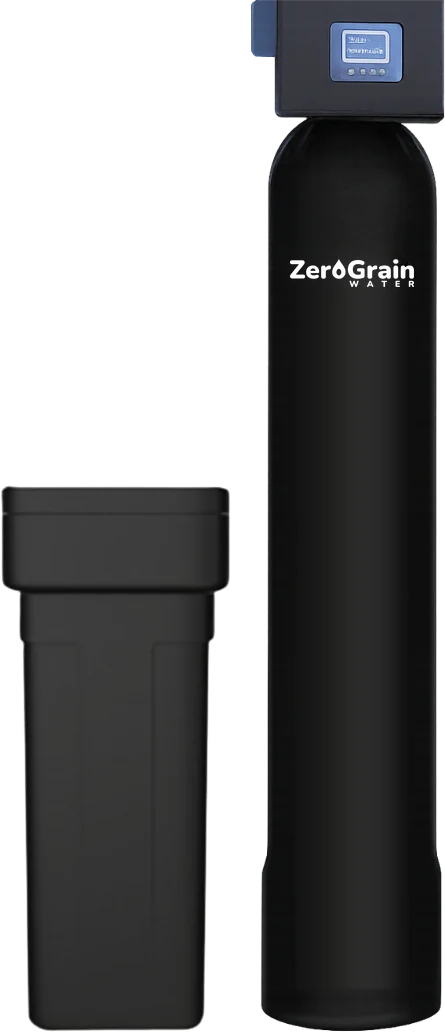
What is included
- A whole-home softener, with its brine tank, for a house that runs on its own well
- An RO drinking tap by the kitchen sink, included with the softener and never sold apart
- The work done by a plumbing contractor licensed under Wisconsin law
- Your well water tested before the work, then the tap tested again until the hardness reading is zero
- Quote calls on weekdays, 7am to 5pm
- One price over the phone, worked out from your answers and any lab results, with no sales visit
Richfield water hardness
Source: Village of Richfield groundwater monitoring program
Get your price
Send your details and we will call you with one price. Nobody comes to the house to sell you anything.
No utility, no average, no annual report
In a city, a utility samples its water on a schedule and publishes the results. Richfield has none of that: no municipal water system, no sampling calendar, and nobody whose job is to notice when your well water changes.
The Village's groundwater monitoring program looked at the question and found no need to consider a village water system. Richfield's 11,861 residents all live in homes on private wells.
Sand and gravel near the surface
According to the Village's groundwater program, the sand and gravel under most of Richfield touches, or nearly touches, the ground surface. The program's word for aquifers like that is unconfined, or at best semi-confined.
Groundwater in that position reacts more quickly to whatever happens at the surface than water deep in sandstone does, and that is the reason the Village keeps watch on it. It also means a well's water is not something you measure once and forget.
The only hardness number is your own
With no utility, there is no Richfield hardness figure to quote, and this site will not invent one. The number that counts comes from your well: a lab report, if one exists, and the reading at your kitchen tap on install day, before anything is hooked up.
Bring that lab report to the call if you have it. If you don't, the reading on install day is where the work starts.
From the phone call to zero at your tap
Call any weekday, 7am to 5pm. Saying Richfield already tells us you are on a well; after that we need how many people are in the home, where the water line from your well comes indoors and any softener already there, and whatever lab results you have.
We size the softener from that and give you one price over the phone. Nobody drives out to your house to sell.
On install day the licensed plumber starts with a hardness test at your tap, and then out comes any old softener. In goes the new softener, with the brine tank that feeds it, then the bypass, then the drain line, which stops short of the drain at an air gap. The RO drinking tap is fitted beside the kitchen sink. After that, the tap is tested again until the hardness reading is zero.
Hubertus, Colgate and the rest of Richfield
This site serves homes all over Richfield, Hubertus and Colgate addresses included. In most towns the opening question is whether a house takes city water or has a well. Inside the Village of Richfield that question answers itself, because there is no public water system to hook up to.
What changes from one address to the next is the well: how deep it goes, how old it is and what ground it sits in. No public figure sums any of that up for Richfield, which is why each quote here starts from the house in question.
Readying a well house for the plumber
The softener belongs where the well's water line comes indoors, which in a Richfield house may be the basement, a utility room or the garage. It needs a drain close enough for its drain line and an outlet for its control valve.
Make room around that spot and clear out the cabinet beneath the kitchen sink, where the drinking-water tap is mounted. Keep any lab report for the well somewhere handy: the plumber's first step is to measure the hardness at your kitchen sink, and with the report beside it you can see both numbers at once.
With no utility keeping records, the folder is yours
A city utility keeps years of results on behalf of its customers. On a Richfield well, that history exists only if the household keeps it: every lab report with its date, the hardness reading from installation day and the setting your softener was given.
Keep those papers together. When something changes later, a bigger household, a softener that needs replacing or a fresh test result, the comparison is quick instead of guesswork. The Village's groundwater program follows the aquifers as a whole; nobody else follows your well.
A reverse-osmosis tap for the kitchen of every Richfield well house
Richfield has no city water, so every reverse-osmosis tap supplied here goes into a house on its own well. One comes with each whole-home softener quoted for the village, Hubertus and Colgate included, and it is mounted at the kitchen sink for drinking water, the one part of the job that happens away from the well line.
Think of it as one package rather than two purchases. There is no separate quote for the tap and no way to buy it without the softener; the single price given on the call covers both, and a household that only wants a drinking tap will hear a plain no.
The plumbing contractor fits it on the same day as the rest of the job, once the softener and brine tank are on the line from the well. Nobody returns later for the kitchen part, whether the house is getting its first softener or replacing an old one.
Matching a softener to a Richfield house when there is no village figure
In a town with a utility, one published figure puts every quote on the same starting line. Richfield has no such figure, and an average built from other households' wells would describe their wells, not yours. So the match is built from what your own household can tell us, in three parts, and none of them needs anyone at the house before installation day.
First, the well's hardness, if a lab has measured it: the line as printed, its unit and the date of the sample. With aquifers the Village's own program calls unconfined or semi-confined, a recent result says more than an old one. Second, the size of the household, which goes into the sizing right next to the hardness, because each person adds to the well water passing through the softener every day.
Third, where the line from the well comes indoors and whether an old softener already sits on it. That spot, with a drain and an outlet close by, is where the new softener and brine tank will stand, and an old unit there is the first thing the plumber takes out.
Missing a piece is normal here. With no lab report, the softener is still sized on the call from the household and the house, at the same single price, and the plumber's first test at your kitchen tap supplies the hardness before any connection is made. After the work the tap is tested again, and again if needed, until it shows no hardness at all.
The Village's groundwater program does not change those three answers. It describes the aquifers under Richfield, not the well under your house, so even the Village's own monitoring leaves the number for your well to you.
Common questions
What is the water hardness in Richfield?
No one publishes a figure, because Richfield has no water utility. Each home's well has its own hardness, and the way to know yours is a lab report or a reading at your tap.
Is Richfield planning city water?
Not according to the Village. Its groundwater monitoring work found no reason to consider a municipal supply, so private wells remain the water source for every home.
Does a softener do anything about bacteria or nitrate?
No. Neither one is within a softener's design. Testing for them belongs with a Wisconsin state-certified lab, and that testing is not something we sell.
Will someone come by before I hear a price?
No. The price reaches you by phone. The first visit is the installation, by a plumbing contractor licensed under Wisconsin law.
Is the drinking-water tap included?
Yes. A Richfield softener comes with its own RO drinking tap, mounted by the kitchen sink. The tap is never sold apart from the softener.
I live in Hubertus or Colgate. Does the call work differently?
No. A house on its own well starts from that well's numbers, the same as any other address this site serves. Have a lab report ready if you have one; if not, the reading at your tap on installation day fills in.
Can the brine tank take potassium instead of salt?
Yes. With potassium chloride in the brine tank, the softener trades hardness for potassium rather than sodium. Mention it on the call if that is your plan.
Does any of the work happen out at the well?
No. The softener goes inside, on the line coming in from the well, and the drinking-water tap goes at the kitchen sink. Nothing at the well itself is touched.
Does every Richfield well need a softener?
Not necessarily, and nobody can answer for the village as a whole, because no one publishes a Richfield figure. Your own well's number decides it: on the USGS scale, water at 60 milligrams per liter or less counts as soft, and anything above 180 is very hard. Between the two it is your household's call. A soft result means the honest answer on the call is no.
Is the softener set from my lab report or from the plumber's reading?
The lab report shapes the sizing and the price on the call. On installation day, the plumber's test at your kitchen tap, made before anything is connected, gives the number the softener is set from. If the two differ, the newer reading is the one that describes your well as it is now, which is one more reason to keep both on file.